Tag: A.i.

  • An A.I. App That Helps Detect Food Allergens. Could It Save Lives? Maybe!

    An A.I. App That Helps Detect Food Allergens. Could It Save Lives? Maybe!

    5 minute read

    A Brush With Death

    His throat was closing. His breaths were audible. Oh no, he thought, I’m having an allergic reaction to something I ate. He drank water, but his throat still warmed, then started to burn to the skin on the outside of his neck. His lungs were rattling, as they do when you have mucus from a cold, but no phlegm came up. So far he wasn’t having difficulty breathing, but it was becoming more … effortful.

    There is an above-average chance I die today, he said to himself. He dropped everything. His wife drove him to an urgent care center while he considered his luck. A snowstorm had blocked all roads yesterday. If this emergency happened one day earlier, he might not have been able to get to aid, even via ambulance. In the end, he got some meds, and he lived to see another day.

    That was me. It was not fun.

    Here’s the background. As a child, I was told I’m allergic to certain foods. Over the years I’ve occasionally eaten them by accident and confirmed (with doctors) that it is possible for allergies to come and go.

    The extreme reaction I had was my own fault. I had eaten something I thought I was allergic to with no adverse result. In an ill-formed experiment, I then ate a whole bunch of it, to see if I had outgrown the allergy.

    As we both know now, I had not. 

    Google Gemini AI Hackathon

    Back to the present. Google recently hosted a hackathon. If you don’t know, a “hackathon” is an event where software developers compete by making apps or games around a theme. Cash prizes and bragging rights are among the prizes. Often a company will sponsor such events as a way to encourage people to use their tech and show off what it can do.

    Google recently released their Gemini 3 A.I. To celebrate they sponsored a Hackathon. I brainstormed for a while and then forgot about it. Then, as ideas often do, it came to me from the darkness of the subconscious at random.

    Isn’t it horrible when children have allergies? I thought. The swelling from an allergic reaction can be more dangerous than a reaction in adults. A child’s throat is smaller and can close faster. Wouldn’t it be great to have an app that could scan a food and alert a child to potential danger? Kids are always with their phones, so it’s a perfect match. Snap a pic of food, and the A.I. provides intel on a user-set list of allergens.

    Agent: Ingredients – the app that provides info about your food

    The app Agent: Ingredients was born. I built it using Google AI studio, which uses the Gemini 3 A.I. and API, etc.

    Here’s how it works: A user selects ingredients they would like flagged and then takes a photo of food (or the list of ingredients on the package.) The A.I. provides a report, noting if any of the ingredients selected are present or likely present. The report includes a disclaimer that this info is not a substitute for professional medical dietary advice.

    I named the app Agent: Ingredients because its initials are A.I. You know, like Artificial Intelligence! Cute! I also felt a text and graphic theme around being a secret agent would make it more fun to use.

    At its most successful, the app could save a life.

    But there’s more! Another use for the app would be for dieters. If you’re on a gluten-free you can use the app. If you avoid specific chemical additives (like BHT) the app can scan a list of ingredients on the package. If you’re vegetarian, you can use the custom field and enter “Meat.”  

    Emergent Features

    There are probably other uses for the app yet to be discovered. I’ve been using it with my phone for fun, dropping snaps of any food I see. The most amazing thing so far was when I came across a treat wrapper with writing on it I didn’t recognize. It looks to my ignorant eye to be Chinese, but I’m not sure. I scanned the food wrapper … and the app TRANSLATED it and showed the ingredients. See screenshot nearby. Groovy!

    Partial screen shot of the app scanning a label and translating it to English.

    I had not told the app to do that while vibe-coding with Google’s AI Studio. The app simply did it. I’m thinking that one of the components of an intelligent agent is initiative. The software “knew” its mission and it completed it.

    Conclusion

    Regarding A.I., I am tired of the negative hype (it’s going to kill humanity.) I am tired of the overly-positive hype (we’re going to upload our brains to the cloud and e-live forever). A.I. is a tool. It’s a tech. It includes promise and peril. Let’s build on the promise and keep watch for the perils. 

    I hope this app shows some of the promise. I built this app, alone, with Google AI Studio, in under a week. This is the future: custom-designed, bespoke tools. After the hackathon I plan on making the code for the app public. You too could make such an app and remix it for your specific needs.

    A.I. at its very best, is an assistant, it’s a tool that lets you make your own tools.

    Health Disclaimer

    The Agent: Ingredients app is a guide. It is not a replacement for professional, medical dietary and allergen advice. Consult a professional for complete information. It seems the safest way to avoid an allergen is this: if you’re unsure, don’t eat it.

    Agent: Ingredients — Try it for free, no ads, no login!

    Click here to see my Hackathon entry submission.

  • Multi-Site Launcher: a free browser extension to make your Web browsing faster and easier!

    Multi-Site Launcher: a free browser extension to make your Web browsing faster and easier!

    Want to be faster, more efficient, more productive as you work or play online?

    Often there are certain online tasks for which you need multiple websites. For example, if you want to check your finances, say you open a bank website, a credit card site, another credit card site, and an investment site.

    If you want to pay bills, you open an insurance site, a water site, an electric site, a mobile service site.

    If I want to check the sales of my books on Amazon, I open several pages for One Odd Cat, Four Weird Tales of Horror, The Katrina Contract, Razor Wire Karma, etc. and so on.

    Bookmarks are useful, but only if everything you need to do is on one site, which is rare. It would be great if you could bunch up bookmarks into a single button and click that for the task. One button, and boom the browser opens all the sites you need.

    Now there’s a way to do it. Easy and free, no login needed, no data saved. Ready to browse the web faster? Links below.

    CHROME: https://chromewebstore.google.com/detail/ogidnjaeifejfaiknfindlcfknclblob?utm_source=item-share-cb

    EDGE: https://microsoftedge.microsoft.com/addons/detail/multisite-launcher/pfipblbhkdjjaknnbdlkdgkbknkjjigj

    YOUTUBE VIDEO DEMO (<3 mins video): https://www.youtube.com/watch?v=vb-oVBbxbAQ

    (Amazon links are affiliate links and author may earn a small commission on qualifying sales at no extra cost to you.)

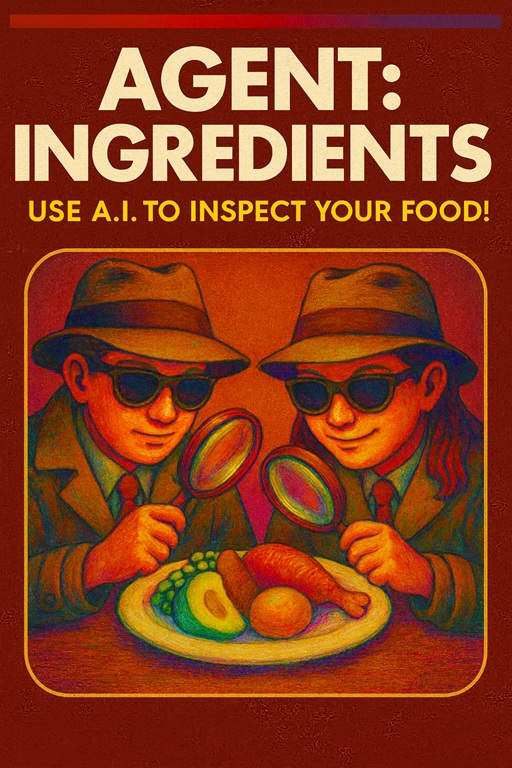
    Image for this article created by A.I. with prompting by Larry Nocella. If you notice it’s in the retro style of Atari 2600 cartridge box art, you win a gold star!

  • Read It Later – a free browser extension

    Read It Later – a free browser extension

    When I browse the net, I often see tons of articles that I want to read later. This used to be handled by a wonderful browser extension called Pocket, but that extension has shut down. (Pocket RIP – Rest In Pixels?) 

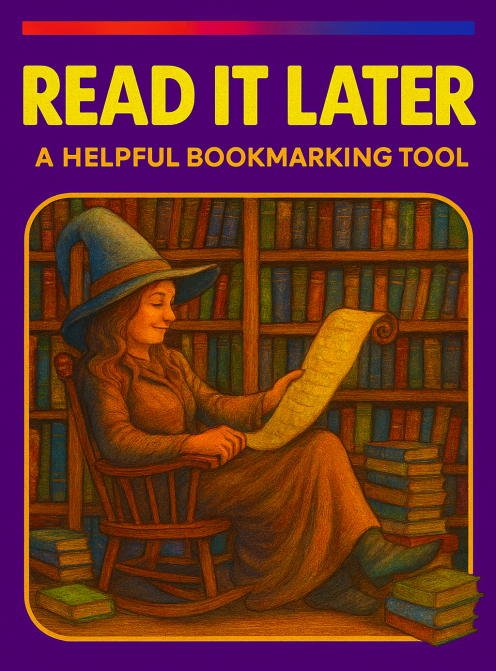
    Anyway, I built an extension that did what I liked best about Pocket. It’s called, “Read It Later.”

    Users can quickly save a webpage link that won’t crowd your usual bookmark bar. The extension will save as many articles as you like so when you get time to read, you can do that and just as quickly delete it.  

    It’s a super-fast bookmarking tool. I’ve found it useful for sites that you want to temporarily bookmark and it doesn’t crowd up your favorites bookmark bar.

    Install it on your Chrome or Edge browser using the links below. It’s free. There’s no sign-in and no ads. All your data is saved locally. 

    I hope you find “Read It Later” useful! 

    Chrome Extension

    Edge Extension

    Video Demo on YouTube (60 seconds) 

  • Vibe-Coding Your Daily Dose of Awe

    Vibe-Coding Your Daily Dose of Awe

    I once read that a key piece to being happy is to experience the emotion of awe. I wondered, “How can I experience awe every day and boost my chances at being happy every day?”

    Most of us feel awe when we look at the night sky and the stars. How could I deliver that every day all the time on demand?

    After some brainstorming, I discovered NASA provides this service. They offer the APOD – the Astronomy Photo of the Day. All I had to do was present an interface to make it easy to view the photos and browse them.

    Here it is: https://nasaphotos.larrynocella.com/

    I used the software development vibe-coding tool Replit. You can use the photo explorer tor free, no ads, no login. Just enjoy and share.

    Don’t thank me, well, actually yes, you can thank me, as I’m a USA taxpayer and a teeny tiny bit of my money has funded NASA. But more than me, please thank NASA.

    Most of all, though, I hope this little app makes you happy.

    Artwork by CoPilot AI and Larry Nocella. Bonus points for anyone who noticed the cool graphic that accompanies this page is a retro design based on the Atari 2600 game system cartridge box art.

  • An Upgrade is Available for Your God(s)

    An Upgrade is Available for Your God(s)

    The more I write about tech, artificial intelligence, and algorithms, the more I sound like I’m talking about religion.

    Estimated reading time: 5 minutes

    Humans Need to Know Why

    Like many folks in this era of podcasts, I have listened to far too many true crime stories to be healthy. 

    There is one thing I find extremely fascinating about the families of the victims. They’ve expressed a common feeling that’s surprising, when the full fate of their loved-one isn’t fully known. Say a person has gone missing, evidence indicates they were likely murdered, but their body is never found, and the details are murky, the suspect isn’t talking, etc. 

    These poor folks will often say something like this, “Not knowing is the most difficult part. I would rather know that he’s dead than just not know anything.”

    To me, that is an amazing statement. 

    These people, suffering at an intensity most of us will fortunately never know, say they would rather have confirmation that their loved one is deceased – rather than simply not know the horrible details of what befell them.

    I’ve heard it over and over from the victim’s surviving families. Suffering a list of horrible emotions, they all say not knowing is the worst of all. 

    It’s common to us all. We humans hate not knowing. We are curious and we need to know why. It’s hard to reduce the evolution and success of our species to a more compact phrase. 

    Gods and Tech Upgrading in Sync 

    Our need to explain why things happen is so powerful that to relieve the agony, we’ll make up stories to explain it. Yes, I’m talking about religion right now, but the need to have a clear why applies in many other areas. It explains the popularity of fact-free conspiracy theories, and much more.   

    Of course, what feeds our explanations (fact-based or not) of why things happen are the ideas around us, is the current technology. As technology upgrades, speculations of “Why?” changes in parallel.

    Early explanations of the unknown didn’t involve much tech. Everything simply had a spirit that animated it.  

    Then came Gods – the “alphas” of a tribe. They mirrored the ruling caste of growing bands of humans. Then God became a singular king-like being who ruled over mortals, since kings were the most powerful earth-based beings.

    Now, in this computer age, we are seeing the emergence of upgraded “god theories” that match the currently most advanced technologies. God is an artificial intelligence, a computer, life itself is a simulation, etc.

    As technology becomes a bigger part of people’s lives, I hear the same language in the explanations of how the mysterious algorithm works, as are usually used to describe the mysterious will of God.  

    The Mysteries of The Algorithm

    While discussing the whys of algorithms, you’ll notice the same ideas and events that occur when people turn to religious thought. Where there is the unknown, there will be a rise of prophets who claim to have the answers, claim to have the ability to influence the algorithm (or God) and they will gladly share their knowledge — for a price.

    On a writing forum recently, a person complained they were posting plenty of content on a social media platform but not gaining many followers. It’s well-known now that social site algorithms respond to “engagement.” Just posting isn’t enough. To get approval from the algorithm, you need to reply, like, and share others’ posts as well. Here was my suggestion to the would-be influencer: 

    The Mighty Algorithm rules all. You are not sacrificing enough of your time for it to consider returning your gift. You must interact with others and increase your holy engagement. Only then shall ye be rewarded. 

    I wrote it that way because it seemed the same solution offered in ancient times to influence the gods: make a decent enough sacrifice to increase the odds of them heeding your prayers.  

    I’ve joined in this new angle on the same old religion with phrases such as –

    • Praise the mighty algorithm – may it bless my content.
    • O, holy algorithm, I pray you use your mysterious powers to guide this post to many likes. 
    • Glorious algorithm, I have spent this last hour on your platform as sacrifice. Please now promote my influence.

    I’m not freshly converted, I just figure if we’re going to use religious-like talk about the algorithm, we may as well make it sound more official.

    And while I sound here like my tone is above it all, or sarcastically playing the newly converted, let me clarify. For I do know the true way to manipulate the gods old and new. I do indeed know the spell, the incantation.

    There is one certain way to earn the favor gods digital and human… pay cash. 

    The One True God 

    Yes. That is my secret to manipulate the mysterious algorithm. I pay as little as possible for the cheapest ads I can afford — that will drive visitors to my books on Amazon.

    A tribute to the real god behind all gods always works and always has worked. Because if there is one true god across all facets of humanity, it’s money. (For my fellow 80s kids, yes, the film They Live got it right.) 

    That type of tribute, that sacrifice, has reliably worked miracles for as long as there have been humans to wonder how to manipulate other humans.

    I think the parallels between mysterious algorithms and religion tie up neatly in this final revelation. What we often call the unknown mysteries, or the motivations of a divine being are often just other mortals, hiding their knowledge, pulling hidden levers, and presenting a show. All to control a man-made system but make it appear divine.

    As ever, what appears the presence of a mystical force is just someone putting their finger on the scale. They are easily and reliably moved with a tithe.  

    Image generated by Chat GPT A.I., prompted by the text of this essay.

  • Am I a Fool for Loving Generative A.I.?

    Am I a Fool for Loving Generative A.I.?

    If Generative A.I. Is Wrong, I Don’t Want to be Right

    Estimated reading time: 6 minutes

    I don’t remember much about grade school, but I clearly recall a classmate’s kindness. In art class, this one kid made drawings that were always fantastic. Mine were always less than. Far less than. I asked him his secret, expecting him to keep such valuable knowledge to himself. 

    He shared generously and without hesitation. “When you fill in a shape, make sure you color in the same direction.” 

    During our next art class, I tried it. The result? My drawing still looked terrible and his still looked amazing.

    That was my first lesson in talent. He was skilled at something, and I wasn’t. I could work for it, but it seemed far too much work.

    I would spend my years envying visual artists of all kinds and their ability to create astounding imagery.

    Sufficiently Advanced Tech 

    Fast forward to today. Along comes generative A.I. DALL-E, Adobe Firefly, Bing Copilot, and so many others, and it feels like a miracle. Because with those tools, so simple, so powerful, so fast, I can draw! I CAN DRAW!!!!

    Correction. I still can’t draw, but I can generate visuals that without that software, I wouldn’t be able to create in a thousand years. That frustrated kid from grade school, who couldn’t draw as well as his classmate even as his mate helped him, has waited for decades and now, finally, finally, finally, I can create art!

    Like Arthur C. Clarke’s brilliant observation: any sufficiently advanced technology will feel like magic. To me, generative A.I.’s image-making abilities feels like something mystical.

    The A.I. Mindset 

    I’m sharing my very positive experience with generative A.I. because I feel compelled to stick up for my friend. A.I. isn’t all bad. Not by a longshot. It could just be my filter bubble, my self-trained algorithm, but it seems like the negative aspects of A.I. get most of the hype. 

    Even when A.I. existed only in our imaginations, there were warnings about it. Science Fiction authors alerted us to the dangers long ago.

    Maybe you’re one of these A.I. haters, annoyed that I like A.I. for what it can do for me. 

    “You could have developed your drawing skill,” some might say. “You could have practiced hard and worked at it.”

    Yes, I know. Instead of saying “I can’t draw,” I’m supposed to say, “I can’t draw… yet.” I know, I know. I too read Carol Dweck’s superb book Growth Mindset (affiliate link) that explains that thinking in depth. Yes, that’s the right attitude.

    If I work at it, I could be a visual artist without A.I. Had I worked at it, I would be one already. Maybe. But it would have taken years upon years upon years of training and practice, years I don’t have and years I don’t want to have. I dedicated those years to writing, and I want to dedicate the years in the future to writing. 

    Now I have a tool that can take a visual idea and make it happen. That is incredible! I love it! 

    A Dangerous Optimism

    “Well sure,” our imaginary hater might say, persisting in this argument, “It’s not your trade that’s being overrun by A.I. That’s why you like it.” 

    Um, actually! My trade (writing) is in just as much danger, if not more. A.I. can write, too. I’m not afraid of it though. What I’ve seen is rather lifeless. 

    Also, lifeless writing created by humans gets published all the time. Further, I see it A.I. as a challenge – it will push me to be even more creative, to achieve, as I’ve said before — something so real it can’t possibly be created by A.I. I’m already competing with millions of faceless writers online, what’s a few million more?  

    Besides, what if my artist pal from grade school had the reverse problem? He can draw, but what if he had (and still has) trouble assembling words? He may be just as thrilled about generative A.I. as I am, wherever he may be. 

    So just because it doesn’t affect me doesn’t mean it’s okay, which is the tentative guilt I feel at loving A.I.

    Forbidden Love

    I am torn when I express my love for Generative A.I. On the one hand there are people I trust saying it’s dangerous. 

    On the other hand, there are people I don’t trust (the techbro douche-o-sphere) hyping every tech advance with religious fervor and causing mayhem. Lately they’ve been rebranding everything as A.I.-powered to keep that investment cash rollin’ in, even if it’s as “A.I-Powered” as a standard phone voice tree. 

    And so, going against people I trust, I wonder, am I allowed to think that A.I. is cool? Amazing? Am I allowed to love it? Or am I embracing our doom? Am I being naive? Is my dangerous optimism leading me wrong again? 

    Yes, I understand that A.I. can be a danger to creativity, it can be a danger to those who make their living creating astounding imagery all on their own. No, I don’t know where A.I. will take us as a society, as a species. Probably the usual mix: more horrors, more wonders. 

    If I could bring it back down to my tiny world, I’m just glad it awakened that kid in me who wanted to draw, forgot he even cared about it for decades and now suddenly, he can. 

    Imagination at Play

    A.I. is a tech marvel. There are complex issues that affect people’s lives, our civilization, our whole species. 

    That’s all true, but just for a moment, can I simplify? Can I say I love generative A.I.? Can I admit I recognize the dangers to people’s employment, and all that but I love it all the same. Just to play. When was the last time tech – or anything – came along and you played with it? Or marveled at its abilities as it filled you with ideas? 

    I’m still a kid in grade school with bricks for hands but still loving the feel of those chunky crayons. I feel like a kid on a slide for the first time, screaming “Wheeeeee!”  

    That’s how I feel playing with generative A.I. and making pictures. like every aspect of all our impressive gadgets, there’s some good things, some bad. 

    For now, I want to ignore the bad because the good isn’t just good. It’s magical. I just want to play.

    Image created by Bing Co-Pilot A.I. Prompt: a cute illustration of a boy wearing a propeller hat hugging a robot with hearts around their heads.