Author: Larry Nocella

  • The Words You Need When You Need to Quit

    The Words You Need When You Need to Quit

    Estimated reading time: 8 minutes

    You’re at the edge of a difficult decision. Or you’re considering a bold move. Or you threaten to quit something you’ve been doing for a while. During those times, if you consult other people, both the well-meaning and the not-so will ask you, “What will you do instead?”

    What will you do when you quit your horrible job? Who will you support if you don’t vote for one of the two very similar corporate candidates? What will you do when you drop out of college? When you leave your abusive relationship? Your awful family? Your oppressive religion and/or cult? What will you do when you move to a new city where you don’t know anyone?

    Sometimes you have an answer. But sometimes, the answer you need is best expressed with two simple words: “Not This.”

    I know, I know. You’re supposed plan. Don’t quit something unless you have something else lined up. That’s the ideal, but sometimes the matter is urgent. For your safety, or sanity, or self-esteem, or something, you can’t stand one more instant where you are. You don’t have time to plan. Ot maybe you’ve tried everything you’re willing to try, but you’ve reached your limit, and you’re done. More done than done. Going forward? You can’t even. Sometimes you don’t know what’s next, but you’re willing to risk it. You have to risk it. Because where you are must end and it must end right now.

    The answer, when people ask, “But what is your plan? Where will go you? What will you do?” is simple: “Not this.”

    That’s the summary of today’s discussion. If you want more detail, it follows. I came across this wisdom by accident, when I dropped out of college.

    Quitting College, The Easy Way

    Let’s start towards the end — when everything I suspected was confirmed against my desire to be so cynical.

    I had called the university administration office to speak to an advisor. Once connected, I asked my simple question, “I no longer wish to attend college, how do I quit?”

    The answer was brief and quick. She didn’t even pause to look it up or ask a colleague.

    “Just don’t pay your bill.”

    I was stunned. This couldn’t be. Wasn’t there something to sign? Wasn’t there a guidance counselor who would want to speak to me, try to talk me out of it? Find out what issue I was having? Didn’t someone — anyone? — want to find out why? I had accrued 75% to 90% of credits required for a Bachelor of Science degree in Computer Science. Now I was announcing my intent to abandon the venture. Did anyone want to know why?

    “Just don’t pay your bill.”

    It seemed that no one cared. No. It was a fact that no one cared. They weren’t even interested in pretending to care.

    “Just don’t pay your bill.”

    It was a perfect summation of all I had experienced, and I was still shocked. This wasn’t an education. It never had been. This was a transaction. What I had thought served the purpose of enlightenment and advanced learning was just another purchase.

    Like nearly everything else, The Academy had fallen to late-stage capitalism. Had it ever been free of it? Or had that been an illusion I, like so many others, had fallen for?  I felt embarrassed. I was naive to have thought it was anything else. Now here it was, laid bare.

     Just don’t pay your bill. Fine. I won’t.

    A Multi-Decade Experiment in Quitting

    I can look back now. After a few decades, it turns out quitting college was one of the best decisions I ever made in my life. Ever. Few decisions have been as frightening. In my tiny world few actions have been so boldly against the norm.

    It was thrilling and terrifying because I had no idea what the future might hold. I had no idea what I would do next.

    I was certain of very little, but that little I was damn sure of. No way could I endure being in a classroom for one more instant. I could not deal with someone else determining where my thoughts should go. I could not abide the ritual of learning by sitting and being lectured to, chasing the curiosity of someone else when I had plenty of my own to explore.

    My truest hate was for “homework.” That was a ritual I had hated since the early days of high school. You hogged up my entire day, and now you want me to do more of your crap in my free time? I don’t think so.

    I consulted others and still others offered their advice, unsolicited, as people do, when they heard of my intent. Some shrugged and let it go. Some claimed I was right but that this ritual was “required” for adulthood. Others were more aggressive, even angry. You’re so close, can’t you hold on and finish? They didn’t know that I had tried that. I had switched majors, transferred to another university, all kinds of variations. Nothing improved. I still hated it all.

    There was a huge lesson here. I didn’t know how to articulate it at the time, but I do now. This bit of wisdom has served me well. Sometimes the best description of our future plan can be described as “NOT THIS!”

    Because sometimes that’s as clear as it gets in the moment. You’ve tried everything to make it work, and it’s just not happening.

    What Happened When You Quit?

    And so, my college career ended. Without ceremony, without fanfare. With a simple, unpaid bill. I returned home to live with my parents. I suspect they were nervous. Both were valedictorians. Both had formal education beyond a standard Bachelor’s degree. I think what prevented further drama was that I went to work immediately.

    I got a job. That was the default plan for after college. I cut out the middle step early. It’s what I always wanted: to be independent and have my evenings to myself. Bonus burst of wisdom here, after quitting with no plan, let your needs guide your next move.

    A few years later, I moved out and supported myself with my girlfriend, who became my wife. She also comes from an academically gifted family and is also a proud college dropout. Yes, it was love at first sight. Funny twist: a mutual college friend introduced us, so I can’t say my journey to university was worthless.

    Pause For De-Offense-ification

    Whenever I tell my story of quitting college so long into the venture and how proud I am that I resisted the sunk-cost fallacy and stone-cold quit, I can come off a little judgey. I am cynical of the whole ritual, but I must take a moment and say this isn’t intended to offend anyone.

    This isn’t me saying that you’re a sucker for getting a degree. Yes, I have my opinions, but I realize that this is what worked for me. I want people to realize that sometimes you have to jump, even without a plan. For those who attended university and had a wonderful experience I’m glad for them. It just wasn’t for me.

    There are trades where intense schooling and certification are required and should be. (Architecture, engineering, medical fields, etc.) For what I wanted to do — computer programming (coding) — many people were self-taught. What I was teaching myself was more relevant than what I was being taught. The Computer Science classes I took never built the skills I wanted to build.   

    In the Rearview Mirror

    Now I’m well into a history of working. I have a career. I like where I am and the unique perspective I bring to the degree discussion. Having only a high school diploma hasn’t held me back.

    I shake my head a bit and laugh when I see stories about organizations moving toward “skills-based hiring” and away from degree requirements. (Source.) Shouldn’t that have always been the case? But I get it. Many people who have degrees are great, competent, etc. But a select few clowns think that sheet of paper is a magic scroll that makes them smart.

    But we’ve all met plenty of people with degrees who are terrible at what they do. A degree and a skill seem to have a loose correlation – if any at all. What matters are the usual traits: determination, integrity, curiosity, humility, etc.

    These aren’t new ideas, but it seems only lately such facts are entering the common consciousness and polite, public conversation.

    Further Reading

    I’ve even seen references to “The Paper Ceiling” (Paper Ceiling website) referring to how us un-degreed people can only progress so far in some short-sighted companies (probably the same ones that insist on making people go to an office.) There’s even a group now, and a name for us, STARs (Skilled Through Alternative Routes.) (The STARs website)

    The Opportunity@work STAR program looks interesting. Unfortunately, it activates my personal paranoia that wonders why? I’m always skeptical of a group that comes out of nowhere and seems to have decent funding. In a system (the USA) where very little happens unless someone might profit, what’s the profit motive for a group like this? Possibly advocating for degree-less people in an attempt to make them accept less pay? I don’t know. I’m likely being too cynical in my speculation. It’s definitely worth a look.

    So anyway, this is me encouraging you – no matter what you want to quit, to not worry so much if you don’t have all the answers. Yes, think about them, yes consider your plans. But I’d suggest also allowing for those times when you simply can’t stand one more moment where you are. Where your only destination is, “Not this!”

    Links below are media on quitting and are affiliate links to Amazon. I will get credit for a referral at no extra cost to you. If you like the everyday wisdom shared here on LarryNocella.com, please click the link and shop away.

    Quit and Thinking in Bets by Annie Duke – Annie Duke is brilliant and has written these two great books about decision-making. I could have used them 30+ years ago!

    The Loneliness of the Long-Distance Runner. This short novel always makes me smile because of its ending. You’ll have to read it to find out why. It’s also a movie. And a song by Iron Maiden.

  • Adding a Shot of Adventure to Every Day

    Adding a Shot of Adventure to Every Day

    Estimated reading time: 6 minutes

    Before There Was Streaming There Were Re-runs

    Gather round, younglings! Let me tell you of a time long ago, before streaming movies and on-demand TV shows. Back then, television was broadcast over the air in a fashion called linear. You couldn’t change the sequence. The station would broadcast the shows when they wanted one show after the other – in a line, aka linearly – and you had to catch them when they were on.

    This led to a thing called reruns. In those dark ages, when a series was sufficiently popular, one of the five over-the-air channels would re-run the show’s episodes.

    Networks would remind viewers what they were showing when. I remember one commercial distinctly. A hand would stretch out, push a button on a computer console, and a voice-over would say, “Set the course for high adventure! Star Trek reruns on Channel 48 at 11 pm! Every weeknight!”

    Or something like that. My memory isn’t exact on it all, but that phrase, “Set the course for high adventure!” hit warp speed as it rocketed into my cerebral cortex. That urging comment has stayed with me ever since.

    Set The Course for High Adventure

    Now, many years later, nearly every morning when I rise, as I go about the daily routine to prepare for the day ahead (making the bed, brushing my teeth, getting dressed, etc.) I think to myself, “Set the course for high adventure!”

    If I’m feeling especially imaginative, I follow that up with a vision of Snoop Dogg passing by. He’s strolling along with his trademark bounce-walk, my psychonaut wife at his side, each of them smokin’ a log-sized blunt. Snoop asks, “Did someone say ‘high’ adventure?” Then they both vanish as I scold them, “Not that kind of high!”

    The point is, at the start of almost every day, I remind myself to prepare for, and aim for, adventure. Because that’s what every day is: an adventure waiting to happen, a journey into the unknown full of surprises and challenges. Even mundane workdays can be packed with creativity and fun and a chance to show the world how awesome you are.

    What Does This Have to Do with An Electric Scooter for Adults?

    It’s like this: my wife is addicted to her morning coffee. Being the good friend I am, I like to supply that drink for her every morning. The problem arose when, as much as we tried, as many copycat recipes as we researched online, we couldn’t find a way to make her very specific Starbucks drink as good as the local baristas.

    My mission became this: travel roughly 1.5 miles every morning to get the Starbucks and bring it back. Driving was no fun, because then I was just another sad soul trapped in a car. I thought about bicycling it, but there are some formidable hills on the way and some mornings I’m just tired. I considered rollerblading, but they are difficult to remove and not good for walking on surfaces. What about an electric pedal-assist bicycle? I could — but if I lost interest, wowzers, those things are expensive.

    There had to be a way to travel small distances that wouldn’t take too much effort, would lead to adventure and wouldn’t clear $4,000 for a reputable brand. How do I get the morning trek to coffee and yet still have fun?

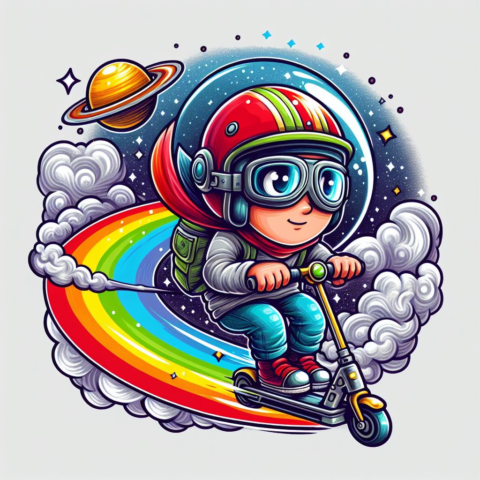
    An adult electric razor scooter ended up being the answer. It was roughly one thousand dolalrs with warranty, could support by big old adult body, and it could handle the hills. And it had a ridiculous nerdy appeal to it. It would anger control freaks and it would empower the downtrodden. Perfect.

    The New Routine

    Now every morning when the weather is good (which it usually is for Spring Summer Autumn) I hit the scooter and get the coffee. I have a messenger bag and some solid-sealing thermoses to hold the drinks. I wear a helmet (of course) covered in stickers showing my allegiance to freedom and noble causes such as gay rights, peace and love, etc.

    The scooter is a tiny bit of adventure, but not so much that my heart is thumping, and not so little that I’m just another person in the car, rolling around town. It’s what I call a sprinkle of adventure. A spritz. A shot.

    There’s other benefits. People smile when they see me. Especially kids. Teens think it’s cool for the quirky edginess, young kids think it’s cool. There are of course some grouches out there, who beep at me or make snide comments on social media. As usual, I ignore them with glee.  

    Contrasting Adventure Styles: A Daily Shot vs Extreme Sports

    The point of the discussion here is to remind you that adventure goes by different definitions. I fear many people skip adventure because when they think of it, they think only of extreme activity: jumping from a plane, cliff diving, intense scuba, etc. 

    Extreme adventures require lots of skill, practice, travel time, often money, etc. Plus, as much of a rush as they are, they often take long time to prepare, cost a lot, require advanced skill, and carry a risk of severe injury or death. Worst of all, they’re often over in seconds.

    There is a place for adventures like that. I don’t render any negative judgment on those who do those things. Extreme adventure is awesome. I love it. I simply say, yes, that’s ONE WAY to enjoy adventure, but it is not the ONLY WAY.

    You can fill your belly with one big meal, or lots of little snacks.

    Extreme adventures are out of the reach of most people. Either because of cost or time. But adventure spritzing, sprinkling, a sort of salt bae of adventure, a little bit every day – that’s in the range of everyone. You just need imagination and desire.

    The response to my scooting is overwhelmingly positive. People are kind, many fill me with compliments, and are curious. I hear plenty of people come up to me and ask things like “How much did that cost?” Or they outright say, “That looks fun!” and so on. And of course, little kids are curious, and teens smile along for the quirky aspect of it all.

    My point of all this is: adventure is out there, you don’t have to be extreme to do it. It’s out there right now waiting for you. Go get it! Set the course for high adventure!

  • Easter, American Freedom, and Trans Rights

    Easter, American Freedom, and Trans Rights

    Today is March 31, 2024. It’s an important day for Amercians and our deeply held beliefs that all should have the freedom to pursue happiness and to live as they want.

    Yes, I was riffing on the fact that today is the Christian/Pagan holiday of Easter as well as Trans Day of Visibility.

    Unfortunately, and somewhat surprisingly, a lot of anti-Trans hate comes from people who either claim to respect Christianity or the USA or both. It’s surprising because Christianity allegedly stands for kindness and respect toward others. The USA stands for allowing others their freedom.

    If we hold these groups to their words, then they should support Trans Day of Visibility. Simple as that. #TDOV

    @scooter_bae

    Today, March 31, 2024 is an important day for Americans and their deeply held beliefs about freedom to pursue happiness and live as they want. #easter #tdov #freedom #transdayofvisibility #usa

    ♬ original sound – Scooter_Bae
  • The “No Life Advantage” of a Comment Commando

    The “No Life Advantage” of a Comment Commando

    Estimated reading time: 8 minutes

    Hiding from Our Beautiful World

    I was on a cruise in the Caribbean, enjoying a vacation many can only dream of. The sun was high, the sky so clear and blue it almost hurt to see. Sparkles dotted the ocean out to the horizon.

    It was one of those vistas so breathtaking, that I gave myself a reminder, almost a prayer. “This is why you work hard. This is what you struggle for, for moments of beauty like this.”

    At least, that’s what I had said earlier. After, I withdrew to our cabin and pulled the curtain closed like some sort of eccentric zillionaire hiding from the world. In the dark, I stared at my cell phone. I had connected to the cruise ship’s spotty (and expensive) internet, so I could login to social media and argue with a moron. We were trading insults about an election that had just passed.

    Fortunately, the scene outside was too gorgeous to ignore. My internal voice spoke up again, no longer reverent but furious.

    “What the hell are you doing?!?!” it yelled. Somehow it got through. I looked up from my phone. What the hell was I doing?

    That was the beginning of the end of my days as a Comment Commando.

    Enlisting in the Comment Commando Corps

    It all began in 2016, when dictator-wannabes rose to power in the USA. They’re still here in 2024, being awful and making life miserable for everyone else.

    Back in 2016, I began reading books about survivors of dictatorial regimes. I sought guidance. What did the average citizen do to resist the rise of cruelty? Could it be stopped?

    The main lesson I found was this: be visible. The human animal looks around for cues on how to act. If we see cruelty, we tolerate it more, ignore it, or worse, participate. If we see kindness, that too, is contagious.

    The advice I kept encountering was simple: remain visible in appearance, habit, and speech. In as many ways as you can, advocate for a society of freedom. Don’t just vote. Be visible.

    It’s not a new concept, but one I felt I could do better than I had been doing.

    So we put up a sign outside our home where it remains to this day. It’s one of those with no allegiance to a party or candidate but rather to principles. As in, “In this house we believe in science, in kindness, that all people are equal, that love is love, etc.” A sticker from gay-rights group HRC went on the back of the car.

    I don’t think these actions are going to save the world. Nothing will “save the world” as long as we have free will. But it was what the experts had said to do. I wanted to do more.

    Where could I be more visible? The internet, of course. I’m a computer guy, I like the challenge of writing and articulating thoughts, and I’m decent with insult zingers. So I metaphorically parachuted into the badlands of Twitter and Facebook, seeking to become the terror of bigots and bullies everywhere. 

    Everyone Off the Bench

    Now some might think I’ve screwed up this article by mentioning politics. “Ew, yucky!” is a summary of most common reactions. I’ve never understood that. If you don’t get involved in politics, it will get involved in you. Quite literally.

    There’s a million ways you can dissect why bad behavior seems to be on the rise, but I distill it down to this: people don’t participate enough in politics. They consider it boring and tedious. They’re partly right. It’s often designed that way to discourage people from paying attention. But participation is necessary. Just like taking out the trash and unclogging the toilet, politics may be unpleasant, but tending to the task is required and ignoring it brings disaster.

    Right now, we need everyone off the bench. Everyone has to get involved in politics. The bad guys have been working diligently to reduce our freedom for decades.

    Now they are in positions of power and using our sense of fairness against us. For example, we respect who wins the election and let them make the decisions. That grace is not returned. They don’t respect anyone else’s electoral win but their own.

    Note the differences in reaction between the presidential elections of 2016 and 2020. In 2016, the free will of the people was accepted by the losing parties. In 2020, the free will of the people has been attacked relentlessly even to this day, despite a complete lack of evidence.

    Lar’s Law of Politics and Internet Arguments, a.k.a. The “No Life Advantage“ Principle

    I don’t want to blame the average American for failure to participate. It’s not entirely our fault that we’re sliding into fascism or religious dictatorship or corporate takeover or whatever rancid dystopia-flavored smoothie results from those three heinous ideas mixed together.

    The system is already against us. We’re worked nearly to death and by the time we’re done all the annoying administrative duties of survival, we’re exhausted. We want to relax and so we ignore politics. Just how the bad guys want it.

    Exacerbating that is the “no life advantage” principle. The what? I’ll elaborate, but basically, in some fields, people who have “no life” have a built-in advantage.  

    Let’s start with you and I: we have family we love, we have hobbies, we have things we want to do, parts of life we want to experience. When we’re not pressured by work, we don’t want to get involved in politics because it’s tedious. We have a life.

    Contrast that with religious extremists, bigots, and other bad actors. As we say in the vernacular, “They have no life.” They are miserable and rather than do something to improve themselves and fix their misery, they oppress others. Religious extremists (not all people with religious belief, but extremists) are even worse. The myth of a paradise-like afterlife is a weapon the bad guys exploit: “Yes, this political work is dull, but don’t worry about it. You’ll have fun in the next life.”

    The “No Life Advantage” Principle has at least two implications:

    • In politics, those with “no life” have an advantage because they will be persistent beyond anything a person who has something fun to do can match.
    • In internet arguments, the person who has “no life” most often wins because they reply and reply until the other party goes off to do something else. The no-lifer gets the final say.

    We good guys, we live-and-let-live types, those of us with lives, have an advantage too: there are far more of us. The problem is that not enough of us are involved. We need you NOW. Everyone off the bench! If we all do a little, we win, because we so vastly outnumber the jerks. Get visible!

    With one small caveat: don’t burn out.

    Being Visible in a Way You Can Sustain

    Hold on a sec, if I’m so pro-participation, why is this article titled “Confessions” like I’m against it? Well, there’s a balance to be maintained. Participate, but don’t overdo it like I did. I’ve adjusted my Comment Commando strategy. I’ve learned to balance it with life.

    You’ve heard of “work life balance?” How about “participate-in-democracy life balance?”

    On that cruise ship, as I neglected that gorgeous view, I realized I needed to re-calibrate, or I was going to flame out and become another non-participator. You occasionally have to enjoy what you’re fighting for. And by fighting, I mean word-slappin’ user ChristAndGunLover2A with a perfect insult about his ancestry.

    Back then, I was pleased with my visibility but concerned with the time I was spending. More than that, I felt I was being manipulated by social media. It’s now common knowledge those apps serve up extreme content to keep you engaged. Was my attempt at allyship serving as support for the marginalized or more to boost a platform’s daily user metric? Was I being visible, or was I …

    • Brawling with trolls from a foreign nation bent on sowing animosity in the USA?
    • Battling with humans paid to push an agenda, to portray unpopular ideas as popular?
    • Arguing with pranksters who try to see how much they can irritate others?
    • Debating with actual extremists and/or actual idiots, neither set ever changing their minds?
    • Talking to bots from the platform itself so they can prove high “engagement” to advertisers?

    I still use social media to be visible but I’m more careful about my time there. I now have a two-comment rule. I may leave a comment if I feel the need (or urge.) If someone replies, I am allowed one counter-reply. Then I’m done.

    The sign in front of my house that marks us as visible advocates for freedom? That stays. The stickers, the flags, that all stays.

    As for visibility, it’s there now, but more a habit, and I’m always looking for new ways to do it in a more meaningful way. I hope you do too. If not, well… remember what I said about ignoring the clogged toilet.

    Imagine that on a nationwide scale. Let’s not find out what that’s like. Participate now, please. And get visible! Thank you!

  • Helping a Depressed Friend Buy a Gun

    Helping a Depressed Friend Buy a Gun

    Estimated reading time: 5 minutes

    What We Can Learn from an Appalling Lack of Situational Awareness.

    “I’m depressed,” my acquaintance posted on Facebook.

    You’ve probably seen similar testimonials. Someone shares a deep secret on social media. In this case, as expected and warranted, many friends offered their support, their love.

    It was one of those moments when you think social media can be a beautiful thing.

    Then, a week later, the same guy posted requesting advice on how to buy a gun. His friends began offering tips on what handgun would be best for him. The same so-called friends who one week ago promised support for his deep depression were offering advice on how he might purchase a firearm.

    It was one of those moments when you think social media can be an awful thing.

    I didn’t know the guy well. “Friend” has become a loose label thanks to social media. To call this guy a friend would be too strong, “Acquaintance” was more accurate. Still, even though I’d only met him a few times, I felt I had to say something.

    A generous conclusion would be his friends were oblivious. Maybe they didn’t remember all the bro-hugging about support against depression from the previous week. I hesitated. Would this be some sort of social overstepping?

    I thought about it overnight. The man’s safety was urgent enough that I was willing to risk our acquaintanceship. I couldn’t be silent, and so I replied to all the responses to his “What’s a good gun?” request. In essence, I said this: “How dare you help your friend buy a gun when he just said he’s severely depressed! Are you all stupid?”

    Speaking Up with Surprising Results

    The replies came back much as I feared. I don’t need to tell you what they said. You already know. They were the same logic-free NRA talking points that have been circulating for years.

    • “He has a right to a gun.”
    •  “If he’s going to kill himself, he’ll find another way, so why does getting the gun matter?”
    • The one I remember most was the context-free one: “We don’t want to become Europe.”

    Who said anything about Europe? I wasn’t discussing gun control, hadn’t even mentioned that topic. This wasn’t a debate. I was addressing a very practical matter: our acquaintance/friend recently told us all that he struggles with extreme depression. Then, mere days later, he expressed interest in buying a gun, and many of his so-called friends gave him advice on how to do so.

    What about that sequence sounds okay to you? To ANYONE except those in the thrall of gun cult mythology?

    To conclude this sad tale, the depressed guy answered all our comments with some mush about appreciating “both sides” of the discussion.

    I wanted to say, “You need some new friends, stat.” But it never came to that, because soon after his “both sides” comment, he deleted it all: his request for gun-shopping advice, his dumb “friends” telling him how to get one and which would be best, and my post scolding them.

    That was the last I heard of it.

    I hope I made a difference but I’m not optimistic. Since he was but an acquaintance, I disconnected from him on social media. I did not want to be around should the obvious happen.

    The Mental Component

    That’s what happened and it is a true story, but I don’t blame you if you don’t believe me. A skeptical person would think I made the story up to promote an agenda. There’s a lot of that going on.

    People make up anecdotes that support their views. They make claims, say, that a person in the military came up to them and told them (in tears) how bad the current president is. Or some religious person claims that dozens of atheists arrived at their temple and wept because they were so hopeless. Or whatever. The sales pitches are never-ending.

    I appreciate skepticism, but if you look around you’ll observe your own stories just like the one I mentioned earlier. Here in the USA, there’s no end of firearm owners who lack situational awareness, that is, the mental component of competent action. Here’s some samples: A person knocks on a door because they’re lost and gets shot. Police arrive at the wrong address with tragic results. A sound of a falling acorn, a plastic bag thrown, all result in shots fired.

    Knowing HOW is not the same as knowing WHEN and WHY

    What worries me most are these amateur commandos think that just because they have shown competency at a firing range, that they understand all there is to about shooting and killing another person. They think that just because they have proven that they know HOW to shoot a weapon, their work is done. They don’t seem to devote much time to pondering or training about WHEN and WHY to shoot one. Their noble impulse to defend themselves and others becomes dangerous because their practice is incomplete.

    They haven’t tested themselves under real-world less-than-ideal conditions. Such as, if they are half-asleep and they think an intruder is in their home. Or if they are exhausted. Or if they are afraid, or babysitting an infant, etc.

    I personally do not own a firearm, and despite my leanings and preferences, I’m not as anti-firearm as you might suspect. I see a use for them, but I see far much more carelessness and very little attention paid to the mental component of action. 

    This isn’t just about weapons, though — this is about anything and any action. When you’re planning for action remember there’s more than just HOW, there’s also WHEN and WHY. There is always a mental piece, and often an emotional piece. All of these play into it and we need to train on them just as much — if not more.

  • Book Review: Fantasticland

    Book Review: Fantasticland

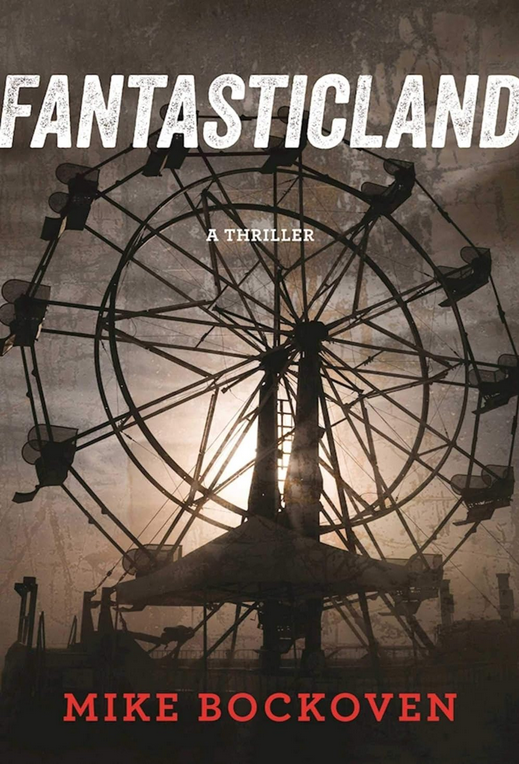
    Fantasticland by Mike Bockoven. Recommend this horror book (even though on the cover it says “thriller” I think it’s more horror.) See my video review on TikTok below. See the book through my Amazon Affiliate link here.

    @scooter_bae Fantasticland by Mike Bockoven #greenscreen #booktok #books #horror #horrorfiction #horrorbook ♬ original sound – Scooter_Bae